


WARNING:
I am not a native English speaker, so I apologize to everyone who will read my articles in English. I am working hard to improve my English and writing this blog is one of my exercises. So please be kind and help me correct the errors or misunderstandings you find within my articles. Thanks.
This book helped me understand how valuable it is to share content online, it convinced me to start a blog on my website and be more socially active and open to opportunities. After reading this book, in fact, I began to see in a new light the moments of meeting and dialogue both with friends and strangers. “Show Your Work!” helped me to increase my trust in people, learning the pleasure of sharing.
The book in 3 sentences
FIRST SENTENCE
We’re all terrified of being revealed as amateurs, but in fact, today it is the amateur—the enthusiast who pursues her work in the spirit of love […] regardless of the potential for fame, money, or career—who often has the advantage over the professional. […] “In the beginner’s mind, there are many possibilities,” said Zen monk Shunryu Suzuki. “In the expert’s mind, there are few.”
Living as an eternal amateur who is very passionate about the things around him is the best way to face life (especially working life). After all, amateurs may be poor in experience but as eternal students, as they are, they never stop learning. Amateurs are not afraid of making mistakes that can make them ridiculous in public, and they are not close inside their beliefs, but they face problems with an open mind and accept that they do not know, after all in a world that changes so rapidly it is difficult to gain experience. such as to come out of amateurism.
“That’s all any of us are: amateurs. We don’t live long enough to be anything else.”
— Charlie Chaplin
SECOND SENTENCE
Now, let’s face it: We’re not all artists or astronauts. A lot of us go about our work and feel like we have nothing to show for it at the end of the day. But whatever the nature of your work, there is an art to what you do, and there are people who would be interested in that art, if only you presented it to them in the right way.
People care about anything! For example, I have a great passion for board games and I follow many game designers who tell online the stages of their work. Whatever your passion, you will surely find someone out there who wants to follow what you do and it is just how you do it that sets you apart from others.
Documenting your working life day by day, or that hobby that we want to transform into work is the first step to identify the contents to share with the world and bring order and clarity to all the steps of our creative process.
Non bisogna avere paura della condivisione. È vero, nel web ci sono un sacco di troll ed haters ma sono convinto del fatto che condividere contenuti di qualità avvicini persone di qualità, affini a te e ai tuoi interessi.
THIRD SENTENCE
“I guess, whatever you do, don’t quit your show,” he said. “Life is very hard without a show, kids.”
Every career has its ups and downs, after all it is an essential condition of life, but perseverance and dedication always pay off.
“Il lieto fine”, ha scritto il regista Orson Welles, “dipende, ovviamente, da dove interrompi la tua storia”.
Persevering in your project regardless of successes or failures is the only way we have to improve ourselves. Think of Woody Allen, one of my greatest myths: the director has directed almost a film a year for about 55 years of his career and shows no sign of stopping. They are certainly not all wonderful films, personally, there are some that I just can’t stand, (Everyone says I love you and To Rome with love are undoubtedly the ones that I don’t like) but in the long list of films made there are some masterpieces that have forever marked the history of modern cinema. The secret is not to give yourself time to stop and think. Immediately start a new project as soon as you finish the previous one with a simple question in mind, how can I improve what I have just completed?
My impressions
Don’t be fooled by the small format, this book is full of interesting and never banal content and food for thought. Of course, some concepts are not really innovative or shocking, but the author’s approach, the examples, and the quotes used have inspired and convinced me fully, so much so that I started an editorial project on the web.
I got to know this book thanks to Ali Abdaal’s Youtube channel, which made me reflect on the power of writing and sharing things online. I had already planned to start a blog on my website, but thanks to this book and to Ali’s advice I realized that it is useless to procrastinate waiting for the right moment.
Who do I recommend this book to?
I recommend this book to anyone working on something creative or who has a visceral passion for something and wants to turn it into a job. In fact, the book not only guides us towards a more open and aware sharing but also suggests some methods to monetize in the right way, thanks to your passion.
I recommend it to all those who, like me, do not like social networks too much and are not particularly good at self-promotion, but prefer to focus more on doing than on telling others what they do. Sharing is precious.
How has this book changed me?
Thanks to Show Your Work, I finally understood the potential of sharing stuff online. If before I tried to hide my “trade secrets” now I think that sharing them with the world is a really powerful tool to create great discussions, receive suggestions, and even improve them thanks to the help and experiences of others: I have become more aware of the fact that there will always be someone in the world better than me, and I’m learning to accept that. Don’t be intimidated or overwhelmed but embrace this idea, learn from others and make sure others can learn from us.
Summary & Notes
1. YOU DON'T HAVE TO BE A GENIUS
FIND A SCENIUS
There are a lot of destructive myths about creativity, but one of the most dangerous is the “lone genius” myth: names like Mozart, Einstein, or Picasso
Creativity is not a gift for a selected group of people who alone take charge of the progress of humanity, but it is a collective process, to which everyone can contribute, without necessarily having a superior mind.
If you look back closely at history, many of the people who we think of as lone geniuses were actually part of “a whole scene of people who were supporting each other, looking at each other’s work, copying from each other, stealing ideas, and contributing ideas.” […] it just acknowledges that good work isn’t created in a vacuum, and that creativity is always, in some sense, a collaboration, the result of a mind connected to other minds.
— Brian Eno
— Brian Eno
Talk about the things you love. Your voice will follow.
It is not easy to find your own space and your own way of telling yourself. The only thing we can dois to start talking about what we like.
READ OBITUARIES
Remembering that I’ll be dead soon is the most important tool I’ve ever encountered to help me make the big choices in life. Because almost everything—all external expectations, all pride, all fear of embarrassment or failure—these things just fall away in the face of death, leaving only what is truly important. Remembering that you are going to die is the best way I know to avoid the trap of thinking you have something to lose. You are already naked.”
— Steve Jobs
It is not necessary to read the obituaries every day to remind yourself that life is short and we have limited time, but keeping this warning in mind will surely help you make wiser choices and chase away the fear or embarrassment of making mistakes.
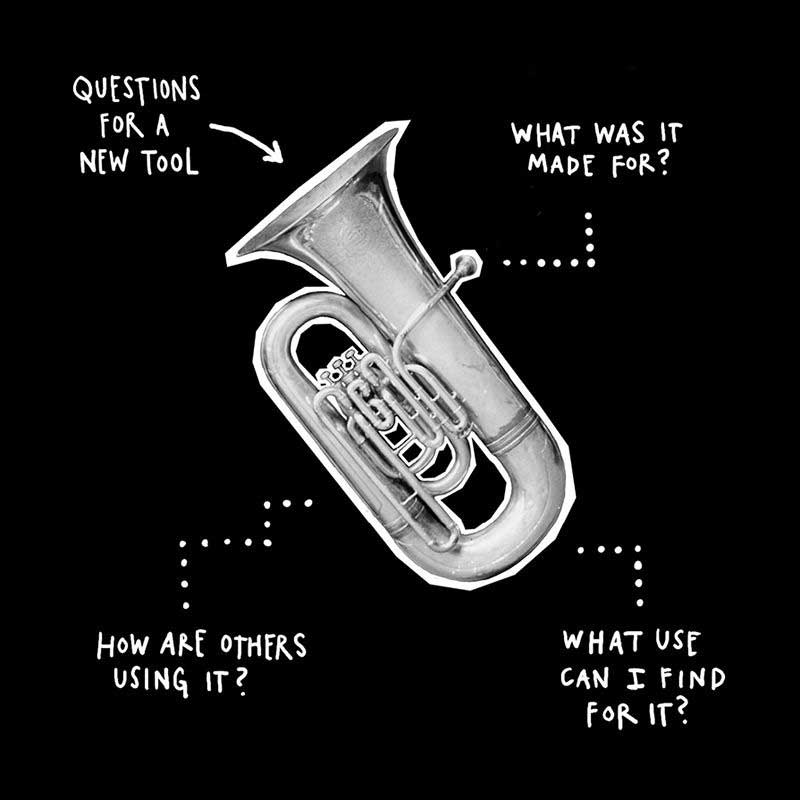
2. THINK PROCESS, NOT PRODUCT
TAKE PEOPLE BEHIND THE SCENES
But human beings are interested in other human beings and what other human beings do. “People really do want to see how the sausage gets made.”
For this reason, don’t be afraid to share who you really are and what you like. Everyone is different, thinks and works differently and that’s what sets you apart from the world out there.
But human beings are interested in other human beings and what other human beings do. “People really do want to see how the sausage gets made.”
BECOME A DOCUMENTARIAN OF WHAT YOU DO
Now, let’s face it: We’re not all artists or astronauts. A lot of us go about our work and feel like we have nothing to show for it at the end of the day. But whatever the nature of your work, there is an art to what you do, and there are people who would be interested in that art, if only you presented it to them in the right way.
Keeping track of your work is not only a great way to present it to the world but also allows you to understand more concretely how your creative process works, what works and what doesn’t. Sharing it instead allows you to receive external feedback that can help improve it.
3. SHARE SOMETHING SMALL EVERY DAY
SAND OUT A DAILY DISPATCH
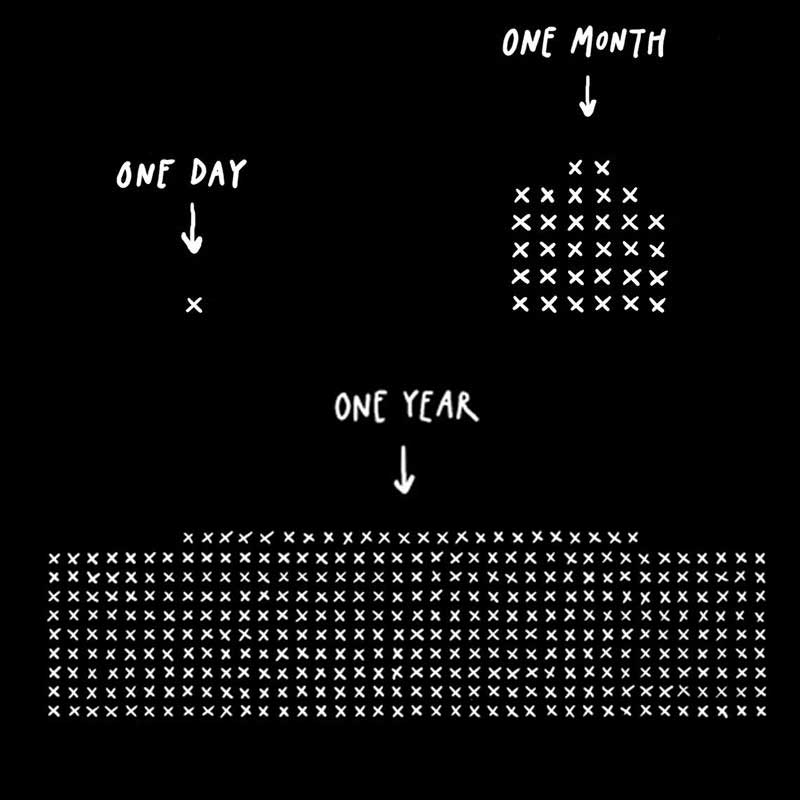
Building a substantial body of work takes a long time—a lifetime, really— but thankfully, you don’t need that time all in one big chunk. So forget about decades, forget about years, and forget about months. Focus on days.
The day is the only unit of time that I can really get my head around.
Don’t be intimidated by the time it takes to build a full-bodied work diary, just take five minutes to find something interesting you did during the day and publish it somewhere so that it can document that day over time, and day after day you will build a diary.
BUILD A GOOD (DOMAIN) NAME
Social networks are great, but they come and go. If you’re really interested in sharing your work and expressing yourself, nothing beats owning your own space online, a place that you control, a place that no one can take away from you, a world headquarters where people can always find you.
Social networks are perfect for attracting attention and meeting new people, but to better express your ideas in complete freedom, the ideal is to have your own website. Starting a blog today is much easier than it was a few years ago.
Online, you can become the person you really want to be. Fill your website with your work and your ideas and the stuff you care about. Over the years, you will be tempted to abandon it for the newest, shiniest social network. Don’t give in. Don’t let it fall into neglect. Think about it in the long term. Stick with it, maintain it, and let it change with you over time.
4. OPEN UP YOUR CABINET OF CURIOSITIES
DON’T BE A HOARDER
We all carry around the weird and wonderful things we’ve come across while doing our work and living our lives. These mental scrapbooks form our tastes, and our tastes influence our work.
In the beginning, writing personal content will be difficult and unsatisfactory and will not meet the expectations you have set yourself. For this reason, start by writing what your tastes are, what inspires you, what are your interests and your reflections on the matter. All your influences are worth sharing because they lead people to understand who you really are.
CREDIT IS ALWAYS DUE
So, what makes for great attribution? Attribution is all about providing context for what you’re sharing. […] Attribution is about putting little museum labels next to the stuff you share.
Everyone steals, re-uses and re-elaborates the contents of others, refining them or adapting them to their own needs. Stealing and being inspired by other people is not a bad thing, but rather it is excellent to start from the ideas of others to develop your own personal thought , however it is an unwritten moral law to attribute to people their merit always citing the authors originals.
5. TELL GOOD STORIES
WORK DOESN’T SPEAK FOR ITSELF
“Stories are such a powerful driver of emotional value that their effect on any given object’s subjective value can actually be measured objectively.”
You will agree with me that the above quote sounds like a tongue twister, the concept is very simple: telling the behind the scenes of a project provides readers with context, a story that brings them closer to the person and not just to work. Humans are always looking for connections, and stories make it easy to make these connections. In addition, a well-written story helps facilitate the understanding of, particularly complex concepts. To improve your writing you need to become a good storyteller.
STRUCTURE IS EVERYTHING
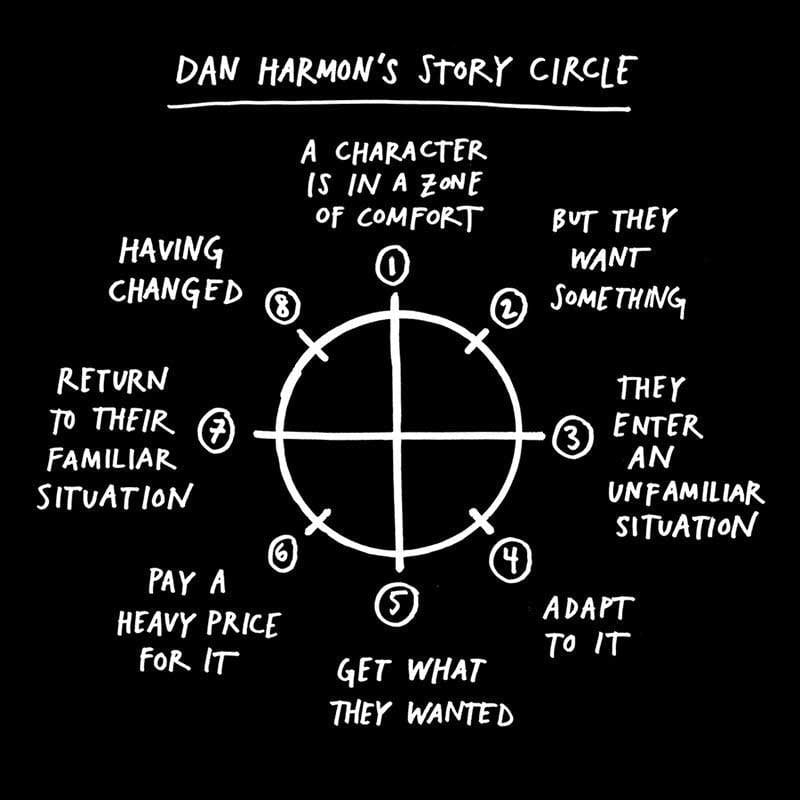
The most important part of a story is its structure. A lot of our raw experiences don’t fit neatly into a traditional fairy tale or a Hollywood plot. […] If you study the structure of stories, you start to see how they work, and once you know how they work, you can then start stealing story structures and filling them in with characters, situations, and settings from your own life.
Giving structure to the story helps people understand it, because it builds a mental framework for both you and your readers. They will be more interested in the story you tell, while you will be able to create a reusable and easily adaptable scheme to the next stories you want to tell.
6. TEACH WAHT YOU KNOW
TEACH WHAT YOU KNOW
Teaching people doesn’t subtract value from what you do, it actually adds to it. When you teach someone how to do your work, you are, in effect, generating more interest in your work. People feel closer to your work because you’re letting them in on what you know.
Competition is a positive aspect of any job and we don’t have to fear it. Revealing the secrets of your creative process does not reduce its value, instead it allows you to get in touch with people who really appreciate your work and can actively contribute to improving it.
Teaching doesn’t mean instant competition. Just because you know the master’s technique doesn’t mean you’re going to be able to emulate it right away.
7. DON'T TURN INTO HUMAN SPAM
SHUT UP AND LISTEN
If you want fans, you have to be a fan first. If you want to be accepted by a community, you have to first be a good citizen of that community. If you’re only pointing to your own stuff online, you’re doing it wrong.
To attract people you have to speak their language, be one of them, know how to listen to them and give the right importance to what they say. Selfishly spamming your own content on the web, without actively participating in the community is useless and counterproductive. We must first of all understand people and listen to them in order to establish a constricting dialogue.
If you want to be noticed, you have to notice. Shut up and listen once in a while. Be thoughtful. Be considerate. Don’t turn into human spam. Be an open node.
YOU WANT HEARTS, NOT EYEBALLS
Stop worrying about how many people follow you online and start worrying about the quality of people who follow you. Don’t waste your time reading articles about how to get more followers. Don’t waste time following people online just because you think it’ll get you somewhere. Don’t talk to people you don’t want to talk to, and don’t talk about stuff you don’t want to talk about. […] “Have you tried making yourself a more interesting person?”
People focus too much on getting fame and little on honing the quality of what they do. The only secret to success is to create quality content and the best way to do this is to focus more on your work than on followers.
8. LEARN TO TAKE A PUNCH
LET ‘EM TAKE THEIR BEST SHOT
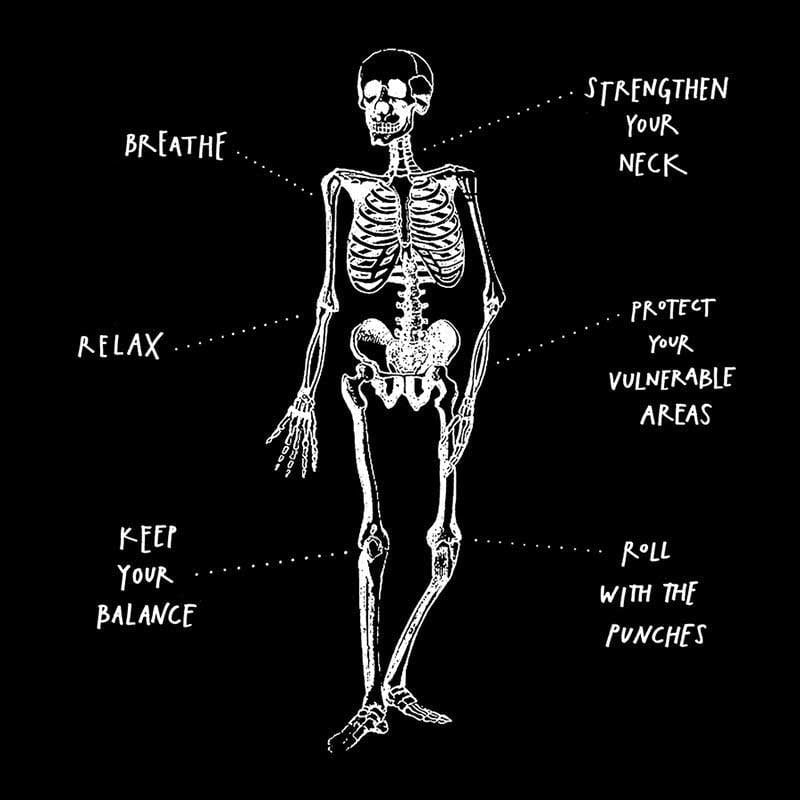
When you put your work out into the world, you have to be ready for the good, the bad, and the ugly. The more people come across your work, the more criticism you’ll face. Here’s how to take punches:
Posting any content online puts you at the mercy of a potentially limitless plethora of people. The more people will see your work the more critical it will come, but it is important to distinguish constructive opinions from envious trolls that do not contribute in any way to the improvement of your work. You can’t dodge them forever and avoid confrontation. You must learn to face criticism with an open heart, trying to exploit it as much as possible, even when it comes to a project you have dedicated time and a lot of effort to.
9. SELL OUT
PASS AROUND THE HAT
hen an audience starts gathering for the work that you’re freely putting into the world, you might eventually want to take the leap of turning them into patrons. The easiest way to do this is to simply ask for donations: Put a little virtual tip jar or a donate now button on your website. […] “Like this? Buy me a coffee.”
Everyone has to pay rent and bills and being able to do it while working on something we like is really a priceless feeling. Don’t be afraid to ask for a financial contribution and monetize thanks to your work with donations or advertising , but it’s important to be consistent with yourself and always respect your audience. Selling out to promote a mediocre product reduces the trust of your audience and it is the trust you get from those who follow you that gives additional value to you and your work.
When people are asked to get out their wallets, you find out how much they really value what you do.
MAKE MORE WORK FOR YOURSELF
Try new things. If an opportunity comes along that will allow you to do more of the kind of work you want to do, say Yes. If an opportunity comes along that would mean more money, but less of the kind of work you want to do, say No.
Focus on what you enjoy doing regardless of how much income you will make. The best thing you can do is experiment and always test your creativity, never losing sight of what you like and what you really want to do.
10. STICK AROUND
DON’T QUIT YOUR SHOW
Every career is full of ups and downs […] “If you want a happy ending,” actor Orson Welles wrote, “that depends, of course, on where you stop your story.”
It won’t always be easy, there will be times when no one will pay attention to your work, and times when you will receive heavy criticism, but the key to getting results is to stay consistent and not get discouraged. Try to deal with the unexpected proactively, trying to critically analyze your own mistakes to get the maximum benefit from them.
START OVER BEGIN AGAIN
Every career is full of ups and downs […] “If you want a happy ending,” actor Orson Welles wrote, “that depends, of course, on where you stop your story.”
The classic phrase “you never stop learning” is a mantra that should be repeated endlessly. Starting from scratch with a new project, another interest, another job does not mean canceling all the progress made, all the experiences we have gained in the course of life, but it means opening up to new approaches and tackling new businesses as beginners. Because in fact the natural propensity of man is to solve problems and without it we would not be really happy.